
When you think of elevating your meals, soy marinated eggs might just come to mind. Known as Shoyu Tamago, these soft-boiled delicacies bring a burst of umami flavor and a beautiful amber hue to your dishes. They're not just about taste; they also pack a nutritional punch. Curious about how to make them or the history behind this culinary gem? Let's explore the fascinating journey of soy marinated eggs together.
History
When you explore the history of soy marinated eggs, you'll discover a fascinating journey that intertwines culinary traditions across Asia.
These delicious eggs, known for their rich umami flavor and deep color, boast culinary origins that trace back to Japanese, Chinese, and Korean cultures.
In Japan, they're often found in ramen, while in China, they're a staple in various rice dishes.
Their cultural significance goes beyond mere taste; they symbolize prosperity and are often used in festive celebrations.
As you dive deeper into regional variations, you'll appreciate how this simple ingredient reflects the creativity and diversity of Asian cuisine, bridging generations and cultures through shared culinary experiences.
It's a reflection of how food connects us all.
Recipe
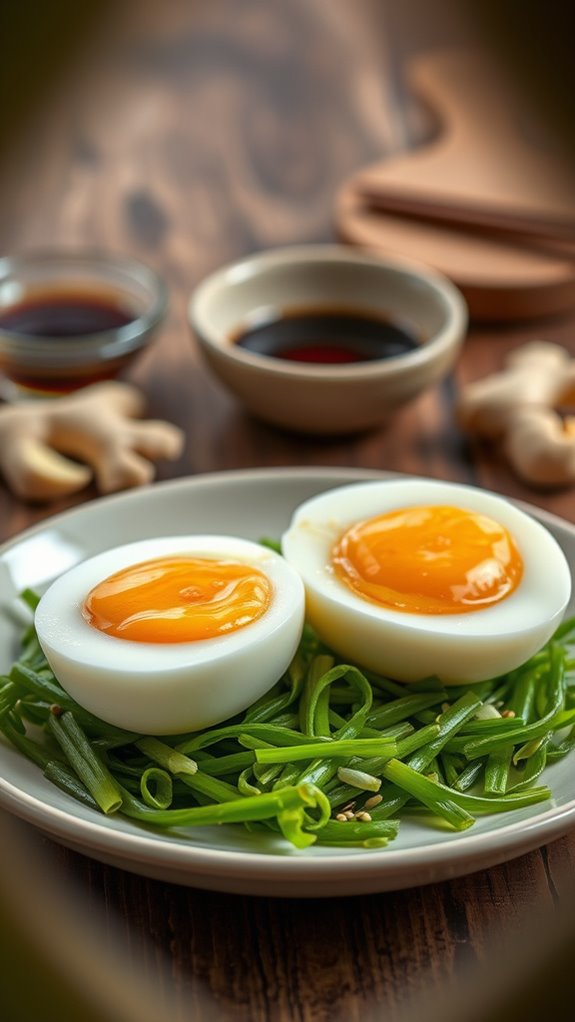
Soy marinated eggs, also known as Shoyu Tamago or Ramen eggs, are a delightful addition to various Asian dishes, particularly ramen. This recipe is simple yet richly flavored, making it an excellent way to elevate your meal. The process begins with soft boiling the eggs, allowing for a creamy yolk that pairs beautifully with the savory marinade of soy sauce, mirin, and other seasonings.
The marination process infuses the eggs with a delicious umami flavor, transforming them into a gourmet topping that can also be enjoyed on its own or added to salads and rice bowls. The result is a perfectly cooked egg with a beautiful amber hue, adding not only taste but also an appealing aesthetic to any plate.
Ingredients:
- 4 large eggs
- ½ cup soy sauce
- ½ cup mirin
- 1 tablespoon sugar
- 1 tablespoon rice vinegar
- 1 clove garlic, minced (optional)
- 1 small piece of ginger, sliced (optional)
- Water (for boiling eggs)
Instructions:
Start by boiling a pot of water, gently adding the eggs once it reaches a rolling boil. Cook them for about 6-7 minutes for soft-boiled eggs (adjust time for desired doneness).
Once cooked, transfer the eggs to an ice bath to stop the cooking process, allowing them to cool for at least 5 minutes. In a separate bowl, combine soy sauce, mirin, sugar, rice vinegar, and optional garlic and ginger; stir until the sugar dissolves.
Once the eggs have cooled, peel them carefully and place them in a resealable bag or container. Cover the eggs with the soy sauce mixture and refrigerate for at least 4 hours (or overnight for best results), turning occasionally to guarantee even marination.
Extra Tips:
For the best flavor, use fresh, high-quality eggs as they'll hold better texture and taste.
Also, feel free to experiment with the marinade by adding chili flakes for spice or sesame oil for added richness. Keep in mind that the marinade can be reused a couple of times for marinating new batches of eggs; just adjust the flavors according to your preference.
Enjoy your soy marinated eggs as part of a comforting bowl of ramen or as a stand-alone snack!
Nutritional Guide
While enjoying your soy marinated eggs, you might wonder about their nutritional benefits. These delightful treats are packed with impressive nutrient content. Each egg contains high-quality protein, which supports muscle repair and overall health.
They're also rich in vitamins such as B12, essential for energy production and nerve function.
Moreover, the soy marinade adds an extra layer of health benefits. Soy contributes antioxidants and isoflavones, known for their role in reducing inflammation and promoting heart health.
The perfect balance of salty and savory makes these eggs not only a flavorful addition to your meals but also a nutritious one.
Final Thought
As you savor the delightful flavor of soy marinated eggs, it's clear they're more than just a simple dish; they're a culinary experience that intertwines nutrition with taste.
These eggs carry a cultural significance, often found in various Asian cuisines, symbolizing warmth and hospitality. Their flavor profile showcases a perfect blend of umami and saltiness, making them an irresistible addition to any meal.
Imagine pairing them with rice or adding them to a vibrant salad; they elevate simple dishes to extraordinary heights.
By integrating these eggs into your diet, you not only enjoy their rich taste but also embrace a tradition steeped in history.