
When you think of Nigeria Soup, you're stepping into a world of rich flavors and diverse ingredients. This dish is a staple in Nigerian cuisine, bringing together assorted meats, dried fish, and hearty greens, often paired with pounded yam or fufu. Each region boasts its own twist, reflecting local customs and ingredients. But what really sets this soup apart are its aromatic spices. Curious about how these elements combine to create something truly special?
History
When you explore the history of Nigerian soup, you'll uncover a rich tapestry woven from diverse cultural influences and regional ingredients. Each Nigerian soup tells a story, reflecting the customs and traditions of its people.
For instance, the way you're accustomed to enjoying egusi might differ markedly from someone in the east savoring oha soup. These regional variations not only highlight local weather and crop availability but also the cultural significance embedded in each recipe.
In northeastern Nigeria, you'll find groundnut soup that's rich with history and symbolic meaning, often linked to communal gatherings.
Recipe
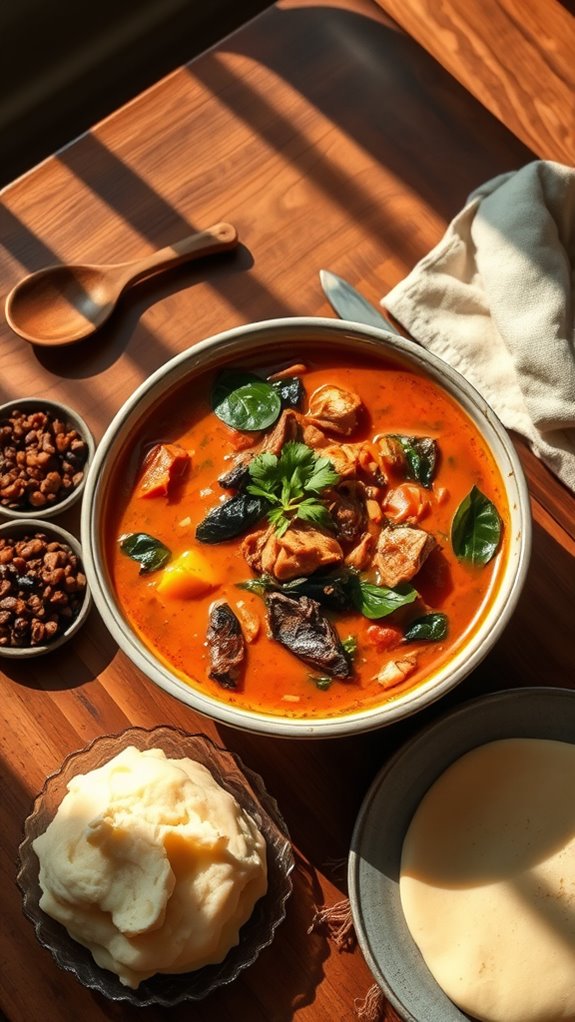
Nigeria Soup is a vibrant and flavorful dish that's a staple in many Nigerian households. Known for its rich, hearty consistency, it incorporates a blend of local ingredients that bring a unique taste and aroma to the table. Commonly made with vegetables, protein sources, and spices, this soup is often served with local accompaniments like pounded yam, fufu, or rice, providing a wholesome and satisfying meal.
The beauty of Nigeria Soup lies in its versatility, as it can be adapted to include various meats, fish, or vegetarian options depending on personal preference. Due to the diverse culinary influences across Nigeria, there are numerous variations of the soup, each offering its own distinct flavor profile. Whether you're preparing a comforting meal for family or hosting a gathering for friends, this Nigeria Soup recipe is sure to delight everyone.
Ingredients:
- 2 cups of assorted meats (beef, goat, chicken)
- 1 cup of dried fish or stockfish
- 2 cups of spinach or bitter leaf
- 1 onion, chopped
- 2 tablespoons of ground crayfish
- 1 cup of palm oil
- 2 tablespoons of ground pepper (or to taste)
- 2-3 cups of water or stock
- Salt to taste
- Optional: 1 tablespoon of locust bean (iru)
Cooking Instructions:
Begin by cleaning the assorted meats and cutting them into bite-sized pieces; then place them in a pot with chopped onions, add water, and season with salt. Cook the meat on medium heat until tender, adding more water if necessary.
Once the meat is cooked, incorporate the dried fish and allow it to simmer for about 5 minutes. Next, stir in the palm oil, followed by the ground crayfish and pepper, allowing the mixture to cook together for another 5 minutes.
Finally, add the spinach or bitter leaf and let the soup simmer for an additional 5 minutes until the vegetables are tender.
Extra Tips:
For added depth of flavor, consider using a mix of different meats for a richer taste. To enhance the traditional flavor, incorporating locust bean (iru) can provide a unique aroma that's characteristic of many Nigerian soups.
Adjust the seasoning according to your preference, and remember to check the consistency of the soup; you can add more water if you prefer it to be soupy or let it cook longer for a thicker texture. Enjoy your cooking experience and the delightful taste of this classic Nigerian dish!
Nutritional Guide
Enjoying a bowl of Nigeria Soup not only satisfies your taste buds but also offers a variety of nutritional benefits. Packed with nutrient density, this vibrant dish combines vegetables, proteins, and spices that support your overall health.
The greens, often found in Nigeria Soup, are rich in vitamins A and C, boosting your immune system and maintaining healthy skin. Meanwhile, the protein source, whether it's meat or legumes, provides essential amino acids necessary for muscle repair and growth.
The spices not only enhance flavor but also possess anti-inflammatory properties. By choosing Nigeria Soup as a meal option, you're not just indulging in a delicious experience; you're also nourishing your body with wholesome ingredients that promote health and well-being.
Final Thought
As you savor the rich flavors of Nigeria Soup, it's important to recognize not just the culinary delight but also the cultural significance woven into every bowl. Each spoonful reflects the heart and soul of diverse communities—every recipe tells a story.
You'll appreciate the regional variations, from the spicy pepper soup of the north to the soothing earthy flavors found in dishes from the south. These soups are often shared during gatherings, symbolizing unity and hospitality.