
You love the idea of yogurt bread but end up with a dense loaf more often than not. You want a pillowy, tender crumb that’s soft straight from the oven and stays that way for days. This guide shows you how to make yogurt bread fluffy and soft every time with simple tweaks you can use now.
You’ll learn which ingredients matter, how to prep for tenderness, step-by-step mixing and proofing, and quick fixes when the loaf isn’t behaving. Follow these clear steps and your next loaf will have that bakery-style softness you want.
Gather What You'll Need (Ingredients & Tools)
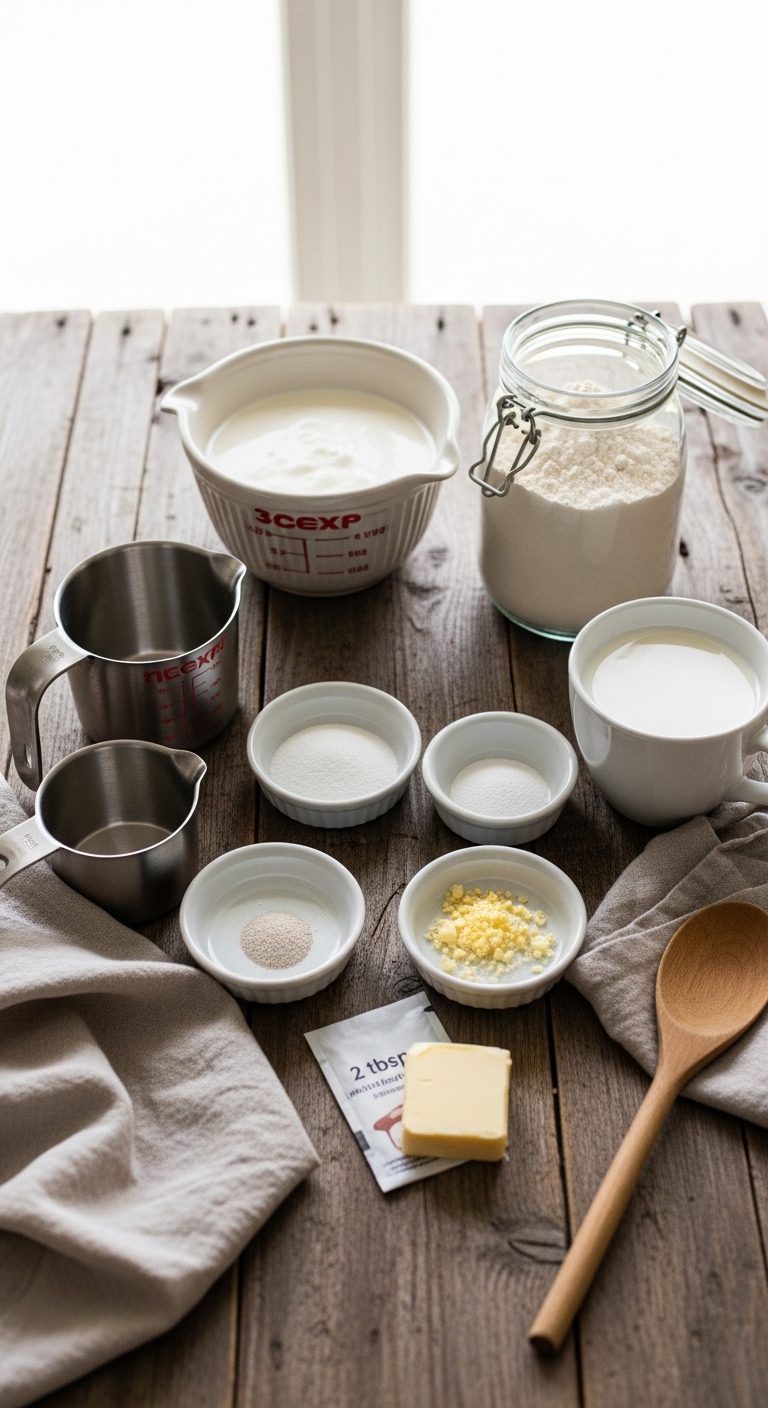
-
Ingredients (makes one 9×5 loaf):
- 3 cups all-purpose flour (or 2½ cups AP + ½ cup bread flour for more chew)
- 1 cup plain yogurt, room temperature
- ½ cup warm milk (about 110°F / 43°C)
- 2 tbsp sugar
- 2 tsp instant yeast (or 1 packet active dry)
- 1 tsp salt
- 2 tbsp melted butter or neutral oil
- Optional: 1 large egg for extra richness and softness
-
Tools:
- Stand mixer with dough hook (or mixing bowl + wooden spoon)
- Instant-read thermometer
- 9×5 loaf pan, parchment paper
Why these matter: yogurt adds tenderness and flavor, fat (butter/egg) softens the crumb, proper yeast and warm liquid control rise.
Prepare Ingredients Properly for Softness

- Bring yogurt and egg to room temperature—cold dairy slows yeast and tightens gluten.
- Heat milk to 105–115°F (40–46°C) when using active dry yeast. If using instant yeast, slightly cooler milk is fine.
- Measure flour by spooning into the cup and leveling—don’t scoop. Too much flour = dense yogurt bread.
- If your yogurt is very tangy, reduce sugar by 1 tsp; very sour yogurt can slow yeast—use a mix of yogurt + milk to mellow.
Quick tip: warm your mixing bowl for 5 minutes in warm water, then dry. A slightly warm bowl keeps dough temperature steady for a stronger rise.
Mix, Knead, and Proof Step-by-Step

- Combine warm milk, 2 tbsp sugar, and yeast. Let sit 5–7 minutes until foamy (skip if using instant yeast).
- Stir in yogurt, 2 tbsp melted butter, and 1 egg (if using).
- Add 3 cups flour and 1 tsp salt. Mix until a loose dough forms.
- Knead: by mixer 5–7 minutes on medium, or by hand 8–10 minutes until smooth and slightly tacky. The dough should pass the windowpane test (thin but not tearing).
- First rise: place dough in a lightly oiled bowl, cover, and proof until doubled — about 60 minutes at room temp (75°F). If cold, give 90–120 minutes.
- Shape gently, place in a greased 9×5 pan, cover and second proof 45 minutes until puffy and nearly doubled.
- Bake at 350°F (175°C) for 30–35 minutes until golden and internal temp ~190–200°F (88–93°C).
Pro tips:
- For a softer crust, brush top with melted butter as soon as it comes out of the oven.
- For extra lift, add a shallow pan of hot water to the oven bottom during the first 10 minutes.
Troubleshoot, Store, and Serve Soft Bread

Common issues and fixes:
- Dense loaf: You likely used too much flour, cold yogurt, or underproofed. Let dough proof longer and measure flour correctly.
- Heavy or gummy crumb: Underbaked—check internal temp and tent with foil if browning too fast.
- Too sour: Use milder yogurt or mix yogurt with plain milk.
Storage:
- Room temp in an airtight container for 2–3 days.
- Slice and freeze for up to 3 months; thaw slices in the toaster or microwave for 20–30 seconds to regain softness.
Variations:
- Add 1/2 cup raisins, 1 tbsp honey, or swap half the flour for whole wheat for a heartier loaf.
- For a quick soda version (no yeast): replace yeast with 2 tsp baking powder + 1/2 tsp baking soda, omit proofing, and bake at 375°F (190°C) for 35–40 minutes. Texture will differ but it's fast.
Your next loaf of yogurt bread can be reliably soft and fluffy with these small, practical changes. Try the egg and milk combo first—they're the easiest tweaks with the biggest payoff.
You nailed the steps—now make it! Pin this guide for your next weekend bake and share it with a friend who loves fresh bread. Which tip will you try first: extra egg, longer proof, or that butter brush after baking?