
You love dessert but want more protein without changing the taste. You can add protein to desserts without changing the taste by choosing the right sources, adjusting wet ingredients, and using small, targeted swaps. This guide shows simple, practical steps you can follow now to boost protein in cakes, brownies, mousses, and puddings—without gritty textures or flavor shifts. Read on to learn what to buy, how much to add, and tricks for invisible protein upgrades.
What You’ll Need to Add Protein to Desserts (ingredients + tools)

Start with a short, useful list so you can shop quickly. Use proteins that blend into flavor profiles:
- Unflavored whey or casein – use 1–3 tbsp per serving for smooth cakes and cookies.
- Collagen peptides – neutral flavor; 1–2 tbsp per recipe.
- Greek yogurt (nonfat or 2%) – replace up to ¼ cup of fat or liquid.
- Silken tofu – swap for ½ cup of cream or custard base.
- Nut butters – add 1–2 tbsp for richness and protein.
- Tools: fine mesh sieve, electric mixer, measuring spoons, kitchen scale.
Tip: buy unflavored powders for the least taste change. Measure precisely—small tweaks make a big texture difference.
Preparing Your Ingredients (how to avoid flavor or texture changes)
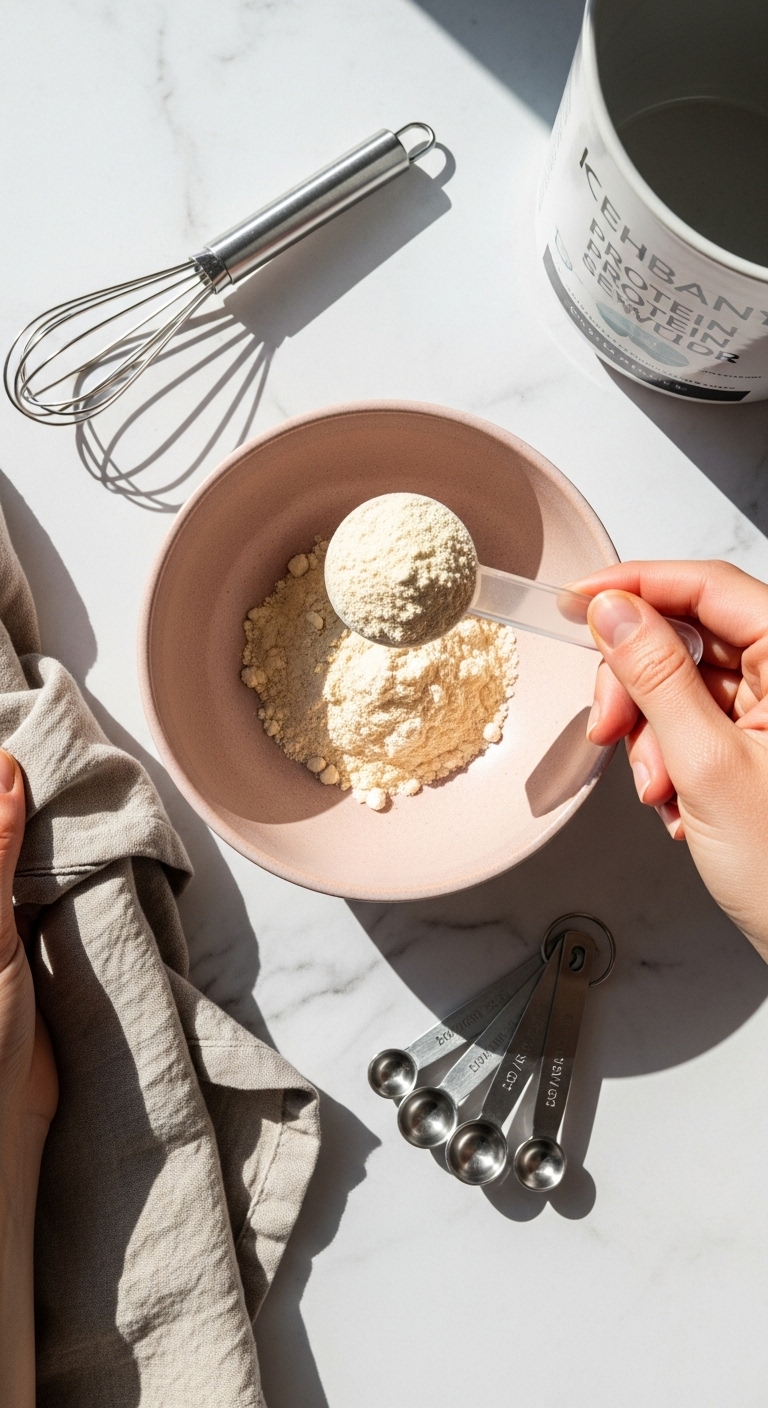
Prep prevents gritty outcomes. Always sift powdered proteins and rehydrate powders with a bit of liquid before mixing.
- Sift 1–3 tbsp protein powder into flour or cocoa to distribute evenly.
- Mix powders with the sugar first to prevent clumping.
- For Greek yogurt or silken tofu, blend until silky before folding.
- Add an extra 1–2 tbsp of milk or water per 2 tbsp protein powder to keep batter moist.
Warning: adding more than 20% protein by weight often alters texture. Start small and test.
Step-by-Step: Add Protein Without Changing Taste (process + measurements)
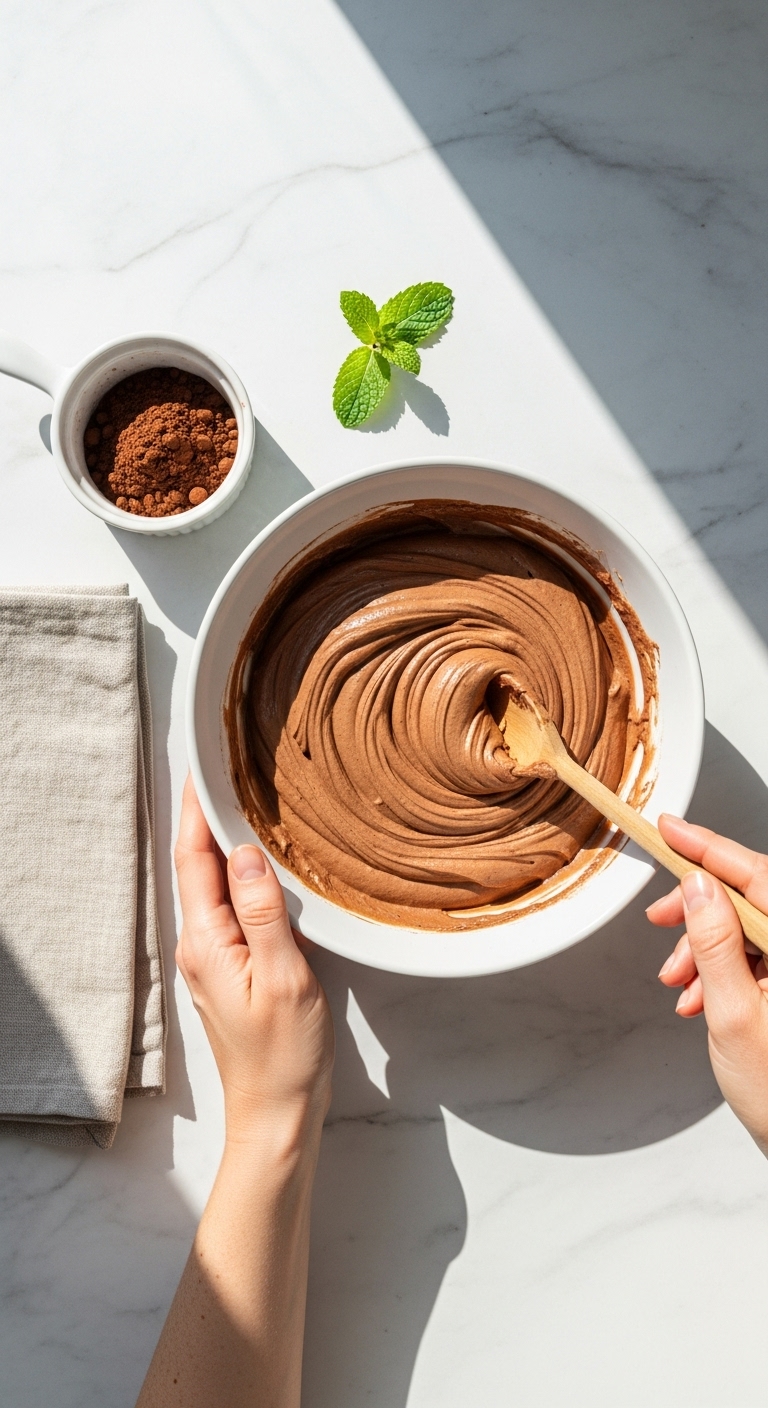
Follow this simple sequence when incorporating protein into most desserts:
- Reduce dry flour or cocoa by 10–20% to make room for protein powder.
- Sift the chosen protein powder with dry ingredients.
- Add extra liquid: add 1–2 tbsp per 2 tbsp protein powder.
- Use complementary flavors: vanilla, cocoa, cinnamon, or espresso can mask subtle notes.
- Fold gently to keep mousse or whipped creams airy.
Example: For a standard brownie recipe (makes 12):
- Substitute 3 tbsp of flour with 3 tbsp unflavored whey.
- Add 1 tbsp extra milk.
- Bake as directed; expect similar rise and fudgy texture.
Pro tricks:
- Use egg whites (beat to soft peaks) to improve lift if you add protein powder.
- For no-bake desserts, dissolve protein in warm milk first to avoid graininess.
Troubleshooting, Storage, and Creative Variations

If texture turns dry or chalky:
- Add 2–3 tbsp extra liquid or a tablespoon of oil per cup of batter.
- Swap to collagen peptides or Greek yogurt if whey tastes off.
If flavor shifts:
- Use chocolate, coffee, or citrus to mask mild protein notes.
- Try flavored but mild powders like vanilla whey—but test first.
Storage:
- Store protein-added desserts the same way as originals.
- Refrigerate dairy-rich desserts for 3–4 days.
- Freeze brownies or bars up to 3 months; thaw in fridge overnight.
Variations:
- Swap half the cream in panna cotta with blended silken tofu.
- Stir 2 tbsp collagen into pudding’s warm milk base.
- Blend cottage cheese with honey and vanilla for a creamy, high-protein filling.
You’ve now got clear, testable methods that help you add protein to desserts without changing the taste. Small swaps, measured amounts, and a few texture tricks keep flavor and mouthfeel intact. Which dessert will you boost first? Pin this guide for your next baking session and share it with friends who love sweet treats and smart swaps. Ready to make this happen? Let’s do it!