
You might find it fascinating that the origins of cake decorating date back centuries, yet fondant flowers have only gained prominence in recent years. Their delicate artistry transforms a simple cake into a gourmet masterpiece, mirroring detail and emotion. As you explore the layers of this craft, consider how each flower tells a story, inviting personalization to each celebration. The next steps involve understanding their history and mastering the recipe, which may surprise you.
History
Though it may seem like a modern cake decoration trend, fondant flowers have roots stretching back centuries. The origins of fondant trace back to the royal kitchens of Europe, where sugar was shaped into elaborate decorations.
These meticulous creations were often used for special occasions and showcased intricate flower symbolism—a language of blooms that conveyed emotion and meaning.
For you, crafting fondant flowers offers not just an artistic outlet but a connection to this rich heritage. Each petal you mold carries whispers of joy, love, or remembrance, allowing you to express your feelings.
As you work, you revive age-old traditions while infusing your cakes with personal significance, making every fondant flower a sweet story waiting to be savored.
Recipe
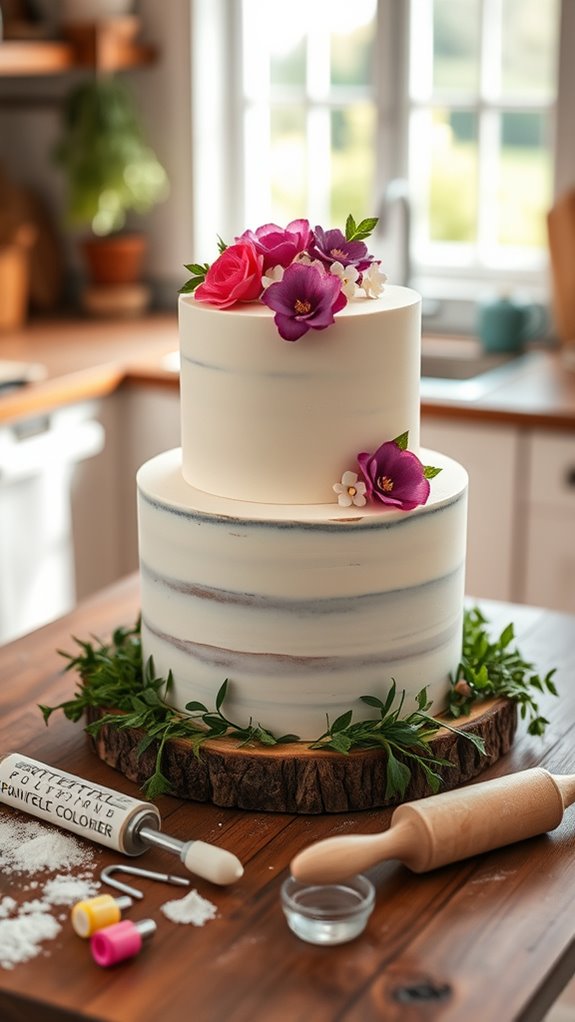
Creating a beautiful Cake with Fondant Flowers begins with a moist and flavorful cake recipe that serves as the perfect canvas for your artistic decorations. Whether you're celebrating a birthday, a wedding, or an anniversary, this cake will impress both visually and in taste. The key to a delicious cake lies in quality ingredients and the balance of flavors, so be sure to use the freshest items available. Fondant flowers can be crafted in various shapes and colors, allowing you to match them to any theme or occasion.
Once your cake is adorned with these lovely fondant flowers, it becomes a true centerpiece. Not only does the cake need to be visually appealing, but it should also be light and fluffy, creating that melt-in-your-mouth experience we all love. This recipe will help you master the process of making both the cake and the fondant flowers, ensuring you present a delightful creation that will be remembered.
Ingredients:
- 2 ½ cups all-purpose flour
- 2 ½ tsp baking powder
- 1 cup unsalted butter, softened
- 2 cups granulated sugar
- 4 large eggs
- 1 tsp vanilla extract
- 1 cup milk
- Fondant (for flowers and decorations)
- Food coloring (various colors for flowers)
- Cornstarch (for dusting)
- Edible glue or water (for attaching fondant)
Instructions:
Preheat your oven to 350°F (175°C) and grease and flour two 9-inch round cake pans. In a medium bowl, whisk together the flour and baking powder.
In a large mixing bowl, cream together the softened butter and granulated sugar until light and fluffy. Beat in the eggs one at a time, mixing well after each addition, then stir in the vanilla extract. Gradually add the flour mixture to the butter mixture, alternating with the milk, and mix until just combined.
Pour the batter evenly into the prepared pans and bake for 25-30 minutes, or until a toothpick inserted into the center comes out clean. Once baked, allow the cakes to cool completely before removing them from the pans and frosting.
Extra Tips:
When working with fondant, make sure to keep it covered with a damp towel when not in use to prevent it from drying out.
For better flavor, consider letting your baked cakes sit overnight covered in plastic wrap before frosting, as this will enhance moisture. Additionally, when coloring fondant, use gel-based food coloring for better pigmentation without altering the consistency.
Always dust your work surface with cornstarch to prevent sticking, and enjoy the creative process of decorating!
Nutritional Guide
Once you've perfected the art of baking and decorating your cake with fondant flowers, it's important to contemplate the nutritional aspects of your creation.
Understanding the health benefits of your ingredients can elevate the experience. For instance, consider swapping refined sugars for natural sweeteners like honey or agave syrup, which provide a lower glycemic index.
You can also use almond or coconut flour instead of all-purpose flour for added nutrients and fiber. Incorporate fresh fruits into your fondant flowers for vitamins and antioxidants.
Always remember that indulgence doesn't have to come at the cost of your health; by choosing smarter ingredient alternatives, you can enjoy your beautifully crafted cake while nourishing your body.
Final Thought
As you take a step back to admire your beautifully decorated cake with fondant flowers, it's important to acknowledge the journey you've undertaken in both baking and creativity.
Each layer, meticulously crafted, showcases your skills in cake decoration. The vibrant flower types you've chosen, whether delicate roses or cheerful daisies, bring life and elegance to your cake.
The smooth finish of the fondant contrasts beautifully with the intricate details of the flowers, creating a visual feast.
Remember, the key is practice; every cake should be a reflection of your unique style. Don't shy away from experimenting with colors and textures.
This cake isn't just dessert but a canvas for your artistry, a sweet demonstration of your dedication and imagination.