
It's funny how many people think barbecue ribs are just a summer delight, yet they're perfect for any season. When you grill them just right, the smoky flavor and tender meat create a mouthwatering experience that can't be ignored. Did you know that the secret lies in the cooking method and the rub you choose? Discovering the perfect recipe can elevate your grilling game, and you'll want to know what comes next to wow your guests.
History
When you think about barbecue ribs, it's hard not to imagine their rich, smoky aroma and tender, fall-off-the-bone texture that have captured the hearts—and stomachs—of people for centuries.
The barbecue origins trace back to indigenous cultures that used slow-cooking methods, infusing meats with unique flavors from herbs and spices. As grilling techniques evolved, European settlers adopted these traditions, adding their flair, leading to the diverse barbecue styles you see today.
Regions like the American South developed signature sauces and smoking processes, each with its distinct character. Today, enthusiasts nationwide celebrate these traditions, continually innovating while honoring the past.
Understanding these roots enhances your appreciation for every succulent bite of barbecue ribs you enjoy.
Recipe
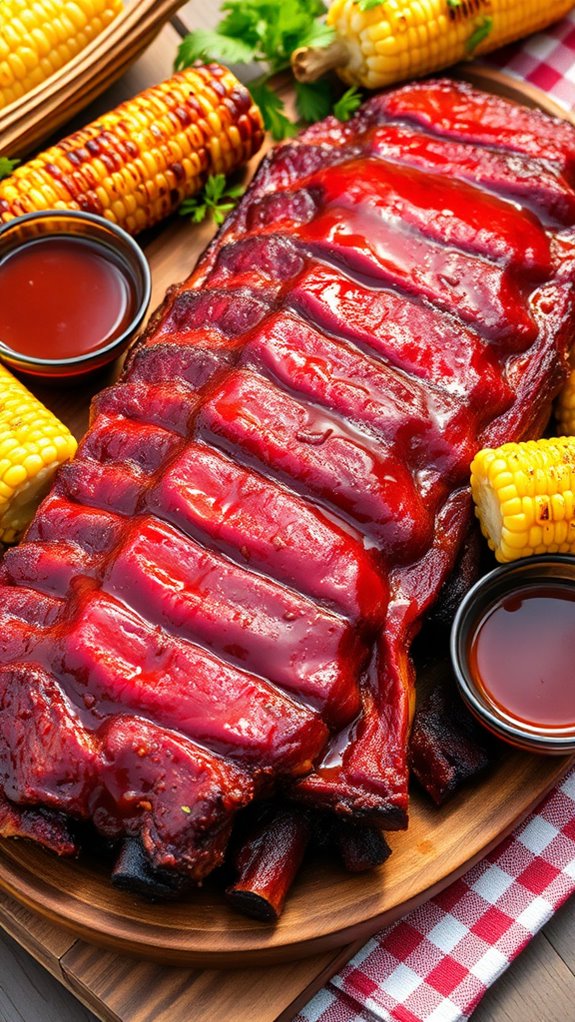
Barbecue ribs are a beloved dish, celebrated for their smoky flavor and tender meat. Ideal for gatherings, cookouts, or a weekend family dinner, these ribs can be grilled, smoked, or baked to perfection. A well-cooked rack of ribs should be juicy, fall-off-the-bone tender, and slathered in a delicious barbecue sauce that complements the rich flavors of the pork. With this recipe, you'll be able to impress your guests and bring the taste of BBQ right into your home.
Before you get started, be sure to choose the right type of ribs. Baby back ribs are tender and meaty, while spare ribs offer a more robust flavor for those who enjoy a bit of extra bite. The key to great barbecue ribs lies not only in the cooking method but also in the seasoning and sauce. A good rub will enhance the natural flavors of the meat, and the cooking technique will determine how tender and flavorful your ribs become.
Ingredients:
- 2 racks of baby back ribs
- 1/4 cup brown sugar
- 2 tablespoons paprika
- 1 tablespoon chili powder
- 1 tablespoon garlic powder
- 1 tablespoon onion powder
- 1 teaspoon black pepper
- 1 teaspoon salt
- 1/2 teaspoon cayenne pepper (optional for heat)
- 2 cups barbecue sauce (homemade or store-bought)
For cooking, first prepare your ribs by removing the membrane from the back and trim any excess fat. Next, combine brown sugar, paprika, chili powder, garlic powder, onion powder, black pepper, salt, and cayenne pepper in a bowl to create a dry rub. Generously coat both sides of the ribs with the rub, ensuring an even layer.
Preheat your grill, smoker, or oven to a low heat (225°F is ideal) and place the ribs bone-side down. Cook for 2.5 to 3 hours, basting occasionally with your favorite barbecue sauce during the final 30 minutes of cooking to build flavor and improve the glaze.
When cooking barbecue ribs, patience is key. Allow the ribs to cook low and slow to achieve that perfect tenderness. If you're using a grill or smoker, consider using wood chips for added flavor. Additionally, always check the ribs for doneness by using a meat thermometer; they should read around 190°F for ideal tenderness.
If you want to caramelize the sauce even further, you can broil the ribs in the oven for a few minutes after they're done cooking. Finally, let the ribs rest for about 10 minutes before cutting into them, which allows the juices to redistribute and enhances the overall flavor. Enjoy your barbecue ribs!
Nutritional Guide
Enjoying a plate of barbecue ribs isn't just about flavor; it's also important to contemplate the nutritional aspect of this delicious dish.
Ribs can be a robust source of protein, packing around 20-30 grams per serving, which supports muscle health and keeps you feeling full. However, be mindful of the caloric content, as a serving might range from 300 to 600 calories, depending on preparation and sauces used.
Beyond protein, ribs provide essential vitamins and minerals, including iron and zinc, aiding in energy production and immune support.
Pair your ribs with lighter sides like salad or veggies to balance your meal. By understanding these nutritional factors, you can savor your barbecue experience while making informed choices about your diet.
Final Thought
As you wrap up your barbecue feast, consider how the experience of savoring ribs goes beyond just taste; it also connects you to cherished moments with friends and family.
You've likely explored a world of sauce variations, each one adding a unique flavor profile to your perfectly cooked ribs. From tangy tomato-based sauces to sweet and spicy blends, the right sauce can elevate your dish.
Remember how different cooking techniques shaped your results? Whether you smoked, grilled, or slow-cooked your ribs, each method imparts a distinct character.
As you reflect on those shared moments around the grill, keep experimenting with flavors and techniques. Your next barbecue can be even more memorable, promising new tastes and stories to create with loved ones.